
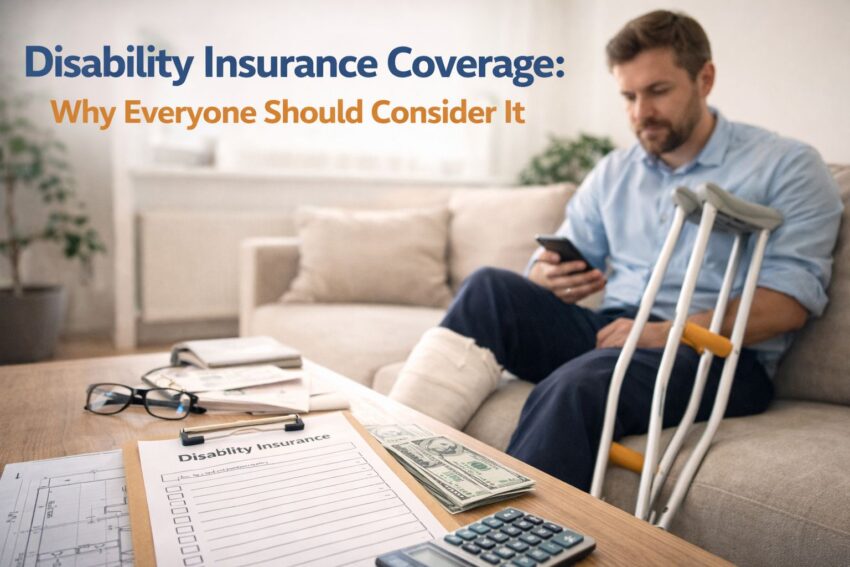
Most people insure their cars, their homes, and even their smartphones, yet very few people take steps to protect their most valuable asset: their ability to earn an income. Disability insurance is often misunderstood, overlooked, or ignored altogether, despite the fact that an unexpected illness or injury can disrupt anyone’s life at any time. Whether you are a salaried employee, self-employed professional, business owner, freelancer, or gig worker, your income is what supports your lifestyle, pays your bills, and secures your future. Losing that income can be financially devastating. Disability does not only happen due to serious accidents. In fact, many long-term disabilities are caused by common medical conditions such as back problems, cancer, heart disease, diabetes, mental health disorders, and chronic illnesses. These are conditions that affect millions of people every year. You do not need to work in a dangerous job to face the risk. Office workers, teachers, engineers, healthcare professionals, and entrepreneurs all experience disabilities that prevent them from working for months or even years. The harsh reality is that most households are not financially prepared for an extended loss of income. Savings may cover a few weeks or months, but long-term financial obligations such as rent or mortgage payments, utilities, car payments, student loans, groceries, insurance premiums, and medical bills continue regardless of your health. Government programs such as Social Security Disability Insurance (SSDI) are often difficult to qualify for and rarely provide enough income to maintain your lifestyle. Employer benefits may help temporarily, but they are frequently limited in duration or coverage. Disability insurance exists to fill this critical gap. It is designed to replace a portion of your income if you are unable to work due to illness or injury. Yet many people only consider it after experiencing a financial crisis, when it is too late to qualify for coverage. The best time to secure disability insurance is when you are healthy and actively working.
This guide will explain exactly what disability insurance is, how it works, who needs it, what types of coverage are available, how much it costs, and why it is one of the smartest financial decisions you can make. By the end, you will clearly understand why disability insurance is not just for high-risk workers, but for anyone who relies on a paycheck.
What Is Disability Insurance?
Disability insurance is a type of income protection coverage that pays you a portion of your regular income if you become unable to work due to a qualifying illness or injury.
Instead of paying for medical bills like health insurance, disability insurance pays you directly. This allows you to continue covering everyday expenses such as:
-
Rent or mortgage payments
-
Groceries
-
Utilities
-
Transportation
-
Loan payments
-
Childcare costs
-
Insurance premiums
-
Medical out-of-pocket expenses
Most policies replace between 50% and 70% of your income, depending on the plan.
The purpose of disability insurance is simple: to protect your financial stability when you are physically or mentally unable to earn a living.
Why Disability Insurance Is Often Overlooked
Many people underestimate their risk of disability. There is a common belief that disability only happens to people in dangerous occupations or due to extreme accidents. In reality, the majority of long-term disabilities result from medical conditions rather than accidents.
Other reasons people avoid disability insurance include:
-
Assuming employer benefits are enough
-
Believing they are too young or healthy to need it
-
Not understanding how disability insurance works
-
Thinking it is too expensive
-
Believing government programs will cover them
Unfortunately, these assumptions often lead to serious financial hardship when disability actually occurs.
The Real Risk of Losing Your Income
Your income is the foundation of your financial life. It funds everything you rely on. Consider the financial impact of losing your paycheck for:
-
3 months
-
6 months
-
1 year
-
5 years
-
Permanently
Even with strong savings, few people can comfortably maintain their lifestyle without income for an extended period. For households with dependents, mortgages, or business obligations, the impact can be severe.
Disability insurance protects against one of the most common financial risks people face: the inability to work due to health reasons.
Who Should Consider Disability Insurance?
The simple answer is: almost everyone who earns an income.
Employees
Even if your employer offers disability benefits, they are often limited. Many employer-provided plans only offer short-term coverage, replace a smaller portion of income, or are not portable if you change jobs.
Self-Employed Professionals
Freelancers, consultants, entrepreneurs, and business owners often have no employer benefits at all. If you are self-employed, disability insurance may be one of the most important protections you can purchase.
High-Income Earners
Professionals such as doctors, lawyers, engineers, executives, and specialized consultants rely heavily on their skills. A disability that prevents you from performing your profession can have a significant financial impact, even if you can technically still work in some capacity.
Young Professionals
Younger people often assume they can wait to buy coverage later. However, disability insurance is typically cheaper and easier to qualify for when you are young and healthy.
Parents and Single-Income Households
If others rely on your income, disability insurance becomes even more critical. Losing income can affect the entire family’s stability.
Types of Disability Insurance Coverage
There are two primary types of disability insurance.
Short-Term Disability Insurance
Short-term disability (STD) typically provides coverage for:
-
A few weeks up to 3–6 months
-
Temporary injuries or illnesses
-
Recovery from surgery
-
Pregnancy and childbirth (in many cases)
Benefits usually begin after a short waiting period, such as one or two weeks.
Long-Term Disability Insurance
Long-term disability (LTD) provides protection for extended periods, often:
-
Several years
-
Until retirement age
-
For the duration of the disability
This type of coverage is essential for protecting against serious medical conditions that prevent you from working long-term.
Many people benefit from having both short-term and long-term coverage.
How Disability Insurance Works
A typical disability insurance policy includes several key components.
Benefit Amount
This is the percentage of your income the policy will replace. Most policies replace 50–70% of your gross or net income.
Elimination Period
This is the waiting period before benefits begin. Common elimination periods include:
-
30 days
-
60 days
-
90 days
-
180 days
Longer elimination periods generally reduce premium costs.
Benefit Period
This refers to how long benefits will be paid if you remain disabled. Common options include:
-
2 years
-
5 years
-
10 years
-
Until age 65
-
Lifetime benefits
Definition of Disability
This is one of the most important aspects of any policy. Stronger policies define disability as the inability to perform your own occupation, while weaker policies define it as the inability to perform any occupation. Own-occupation coverage offers significantly better protection.
Why Employer Disability Coverage Is Often Not Enough
Many employees believe their workplace benefits are sufficient. In reality, employer-provided disability coverage often has limitations such as:
-
Coverage only replacing 40–60% of income
-
Benefits being taxable
-
Coverage ending when you leave the job
-
Limited duration of benefits
-
Strict definitions of disability
Relying only on employer coverage can leave major gaps in your financial protection.
The True Cost of Not Having Disability Insurance
Without disability insurance, people often rely on:
-
Personal savings
-
Credit cards
-
Loans
-
Retirement account withdrawals
-
Financial help from family
-
Government assistance
These options can quickly drain your long-term financial security. Retirement savings that took decades to build can disappear in months. Debt can accumulate rapidly. Financial stress can also negatively affect recovery and mental health.
Disability insurance helps prevent these outcomes by providing stability during difficult periods.
How Much Does Disability Insurance Cost?
The cost of disability insurance depends on several factors:
-
Your age
-
Your health
-
Your occupation
-
Your income
-
Benefit amount
-
Benefit period
-
Elimination period
In many cases, premiums range between 1% and 3% of your annual income. For many people, this is a relatively small price to pay for significant financial protection.
You can often customize policies to balance affordability with coverage.
Common Myths About Disability Insurance
“I’m young and healthy, I don’t need it.”
Disability can happen at any age. In fact, younger individuals often benefit the most because they can lock in lower premiums.
“I work a desk job, so I’m not at risk.”
Many disabilities are caused by illnesses, not accidents. Desk jobs do not eliminate risk.
“I have savings, so I’m covered.”
Savings may help short-term, but they rarely provide long-term income replacement.
“Government disability benefits will take care of me.”
Government programs are difficult to qualify for and often provide limited financial support.
When Is the Best Time to Buy Disability Insurance?
The best time to purchase disability insurance is before you need it. Policies are based on your current health. Once you develop a medical condition, it can become more expensive or even impossible to qualify for coverage.
Buying coverage early allows you to lock in better rates and stronger protection.
Disability Insurance as Part of a Smart Financial Plan
Disability insurance should be viewed as a core component of financial planning, alongside:
-
Emergency savings
-
Health insurance
-
Life insurance
-
Retirement planning
-
Debt management
It protects your ability to earn income, which supports all other financial goals.
Final Thoughts
Disability insurance is not just for high-risk workers or older adults. It is for anyone who relies on their income to support their lifestyle and responsibilities. The risk of disability is far more common than most people realize, and the financial consequences can be severe without proper protection.
By securing disability insurance, you are not just buying a policy. You are buying peace of mind. You are protecting your future. You are ensuring that an unexpected illness or injury does not erase years of hard work and financial progress.
If you can insure your car, your home, and your phone, it makes sense to insure the most valuable asset you own: your ability to earn an income.